Being a doctor today does not mean knowing everything. It means knowing how to access the right information when you need it. Medical knowledge is evolving rapidly. New studies are published daily, guidelines change, and clinical trials begin and end; even a familiar question may require a fresh look at the evidence. The real challenge today is not simply accessing information. The real issue is finding reliable information, understanding it, and keeping track of what you find. Here are 10 tools that can assist you at various stages of this process.
1. PubMed: If you are interested in biomedical research, it is hard to overlook PubMed. Managed by the U.S. National Library of Medicine, PubMed provides free access to over 40 million citations and abstracts covering biomedical and life sciences literature. It is often one of the first resources consulted when you need to find published research on a specific medical question. Best for: Biomedical research and finding scientific literature. PubMed
2. UpToDate: Sometimes, you don't need to start by sifting through a pile of individual articles. You need a clinically focused answer. UpToDate offers evidence-based clinical decision support—featuring expert-authored recommendations, clinical topics, and interactive flowcharts—designed for point-of-care use. Its content covers over 13,000 clinical topics across 25 specialties. Best for: Quickly checking clinical questions and evidence-based recommendations. UpToDate
3. DynaMed: DynaMed adopts a similar point-of-care approach with a strong focus on evidence-based clinical information. Its editorial process involves continuously reviewing medical literature, critically appraising the evidence, and updating topics as new findings emerge. DynaMed currently covers more than 35 specialties and is updated multiple times a day. Best for: Evidence-based clinical decision support and staying up to date. DynaMed
4. BMJ Best Practice: BMJ Best Practice is another option to turn to when you need practical clinical guidance rather than a long list of search results. With content updated daily using evidence-based methodology and expert opinion, it offers step-by-step guidance covering diagnosis, prognosis, treatment, and prevention. Best for: Practical, evidence-based clinical guidance at the point of care. BMJ Best Practice
5. Cochrane: Cochrane is worth exploring when you want to look beyond individual studies. Cochrane produces systematic reviews of health and care research by synthesizing evidence from multiple studies to answer specific healthcare questions. Best for: Finding systematic reviews and synthesized evidence. Cochrane Evidence
6. ClinicalTrials.gov: Published research shows you what has already been studied. ClinicalTrials.gov, on the other hand, can help you see what is currently being studied. It is an online database containing information on clinical research studies and their results, covering trials from the US and around the world. Best for: Finding clinical studies, ongoing trials, and study results. ClinicalTrials.gov
7. Google Scholar: Not every useful academic resource is found through a medical database. Google Scholar offers comprehensive search capabilities across scholarly literature, including articles, theses, books, abstracts, and other academic resources. It also makes it easy to discover related studies, citations, authors, and publications. Best for: Comprehensive academic searches and discovering related research. Google Scholar
8. Zotero: Finding research is only half the battle. At some point, you need to keep track of what you have found and stay organized. Zotero is a research and reference management tool used to collect, organize, annotate, search, and cite sources. You can group materials into collections, add tags, and create saved searches. Best for: Building and organizing a research library. Zotero
9. EndNote: EndNote is another well-established reference management option, particularly useful during the stages where research is transformed into an academic or professional paper. It helps researchers build reference libraries, organize sources, discover research, and manage citations and bibliographies throughout the writing process. Best suited for: Reference management, citations, and research writing. EndNote
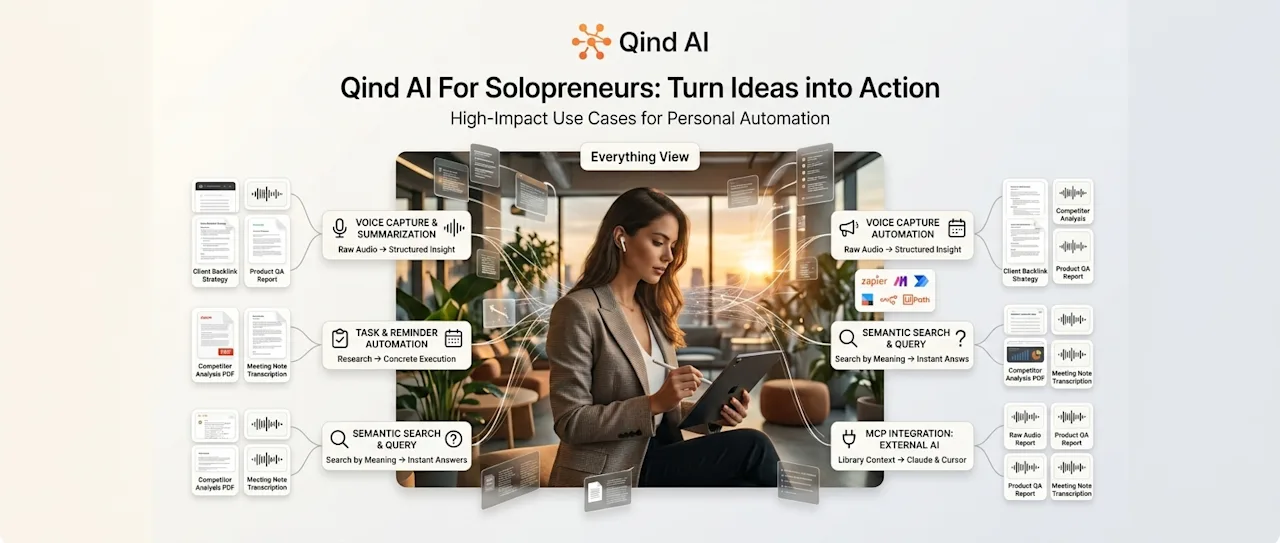
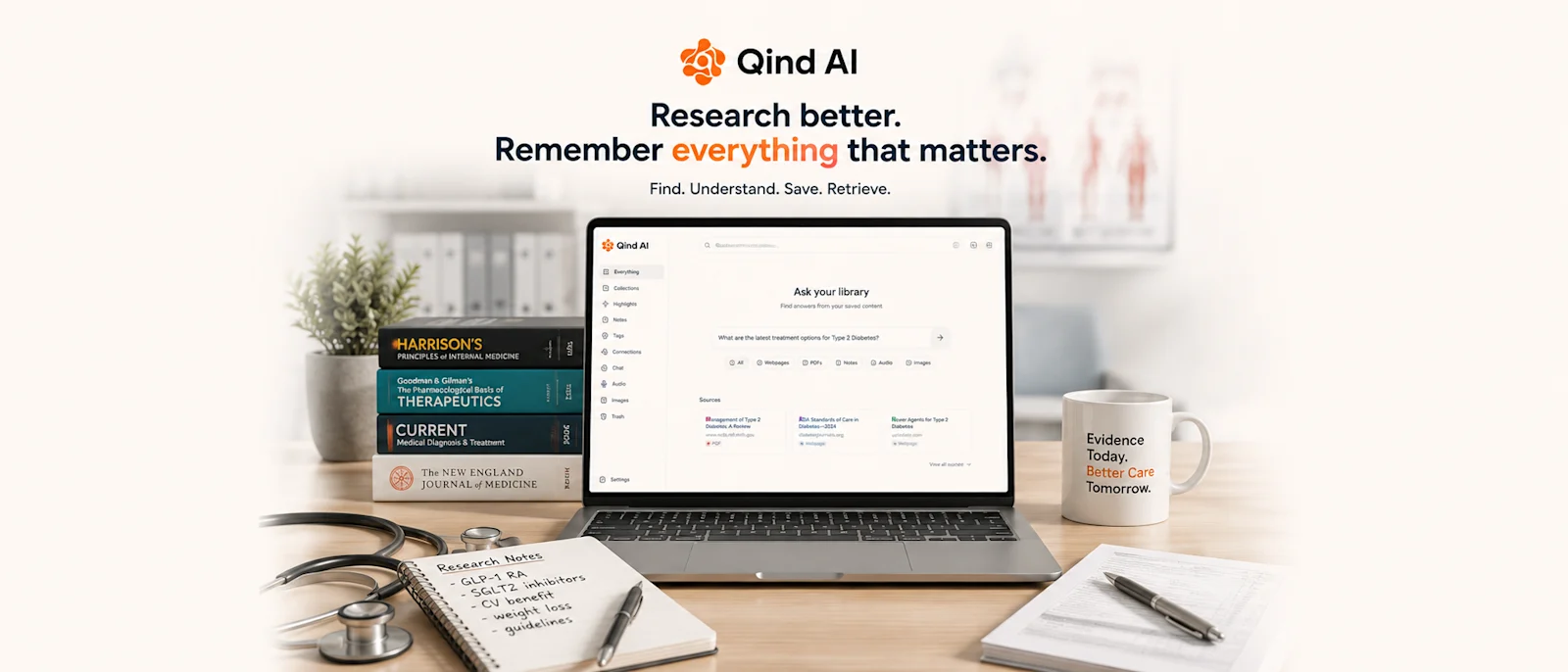
10. Qind AI: Then there is that part which is often overlooked. You found the article. You read the text. You highlighted a useful section. You saved the guide. You took a screenshot. But what comes next? Can you find that information again a few months later when you actually need it? Qind brings a different approach to this part of the workflow. It allows you to save articles, PDFs, notes, audio recordings, and images, and then uses AI to summarize and tag them. Instead of relying solely on folders or trying to remember where something was saved, you can perform semantic searches within your library and ask questions about the content you’ve collected—with answers linked directly to the saved sources. Best suited for: Keeping research materials organized and easily retrievable when needed.
Qind AI The Tool You Use After the Research Process Is Complete These tools solve different problems. PubMed and Google Scholar help you find information. UpToDate, DynaMed, BMJ Best Practice, and Cochrane help you evaluate and understand various types of medical evidence. ClinicalTrials.gov allows you to examine ongoing and completed clinical trials. Zotero and EndNote help you manage your bibliographies and research libraries.
However, there is another aspect of the workflow that is easily overlooked: What happens to the information after you find it? Because research doesn't end when you close the browser tab. An article you find today might become important six months from now. A guideline you saved could become relevant for a completely different project. A note you took during a literature review might hold the answer to a question that hasn't even crossed your mind yet. Accessing information is one thing. Making that information functional is something else entirely. And perhaps the point where the right information management tool makes the biggest difference is precisely this stage of medical research.