
Metni, görsele uygun tipografi, akıcı makale yapısı ve okunabilir paragraflarla yeniden düzenledim. Kopuk ve tek satırlık cümleler birleştirilerek anlam bütünlüğü ve net bir başlık hiyerarşisi oluşturuldu.
The 1,700 Link Trap: Why Manual Knowledge Systems Collapsed
I used to save everything. If I found an interesting article, a useful tool, a technical explanation, or something that might help with a project six months later, I saved it. My system was simple: I had a Notepad file where I would paste the URL and write a short explanation next to it—something like “useful article about AI agents—check this when working on the new automation project,” “interesting research tool—might be useful for Qind,” or “good explanation of semantic search.”
It worked for a while, until it didn’t.
Then I Counted Them
One day, I actually counted how many URLs I had collected: 1,700 URLs. Not bookmarks neatly organized into folders, and not a beautifully structured knowledge base—just a huge list of things I had decided might be useful someday. That's when I realized something: I had spent years collecting knowledge without actually managing it.
The worst part wasn't having 1,700 links; the worst part was knowing that many of them were probably still valuable, but I had no practical way to figure out which ones. I didn't have the time to open 1,700 pages again, I couldn't remember why I had saved many of them, and I definitely wasn't going to spend several weekends going through my digital history. So eventually, I did what many knowledge workers probably do: I gave up on the collection.
The Researcher's Trap: Collecting Feels Like Progress
I enjoy researching, and that's probably part of the problem. When you enjoy learning, collecting information feels productive. You read an article, discover a new AI tool, find a research paper, see an interesting GitHub project, or find a great explanation of something you've been trying to understand, and you think: "I'll save this. I might need it later."
So you save it. Then you find another thing, and another, and another. Eventually, saving information becomes almost automatic. But there's a huge difference between collecting information and building knowledge. Saving something doesn't mean you'll ever use it, and storing something doesn't mean you'll ever find it again. That's the part we often forget.
The Old Knowledge Management Model Doesn't Scale
For years, the solution was basically Save → Organize → Search later: create folders, add tags, write notes, rename files, build databases, maintain your Notion workspace, and clean your bookmarks. Then create another folder because the first folder became too large. Eventually, you spend almost as much time managing your knowledge as you spend consuming it.
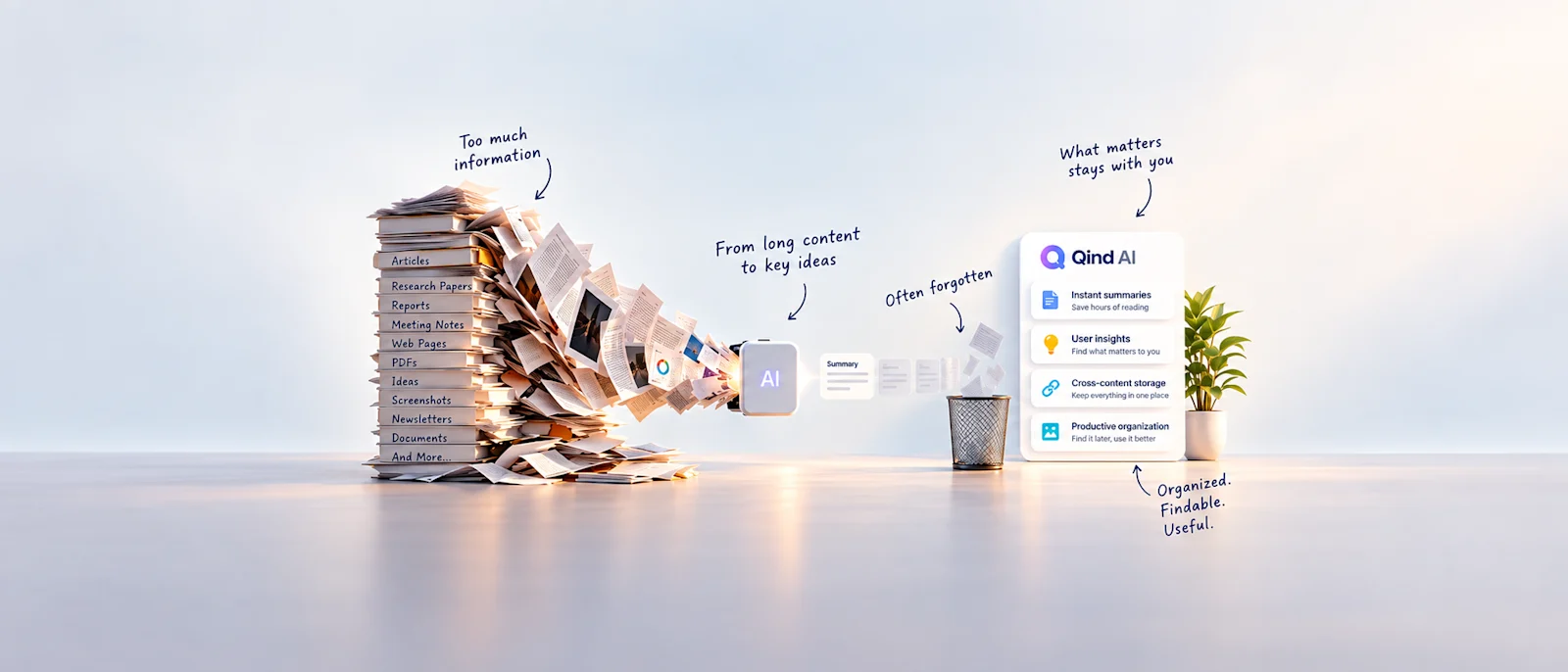
That model made sense when the amount of information we collected was relatively small. But knowledge workers are dealing with something very different today. We consume articles, PDFs, videos, podcasts, newsletters, documentation, research papers, screenshots, meeting notes, AI conversations, GitHub repositories, and countless web pages. The problem isn't storage anymore—storage is cheap. Attention isn't.
AI-First Knowledge Management Changes the Question
An AI-first knowledge system starts with a completely different question. Traditional systems ask "Where should I put this?", whereas AI-first systems ask "What is this, and why might it matter later?"
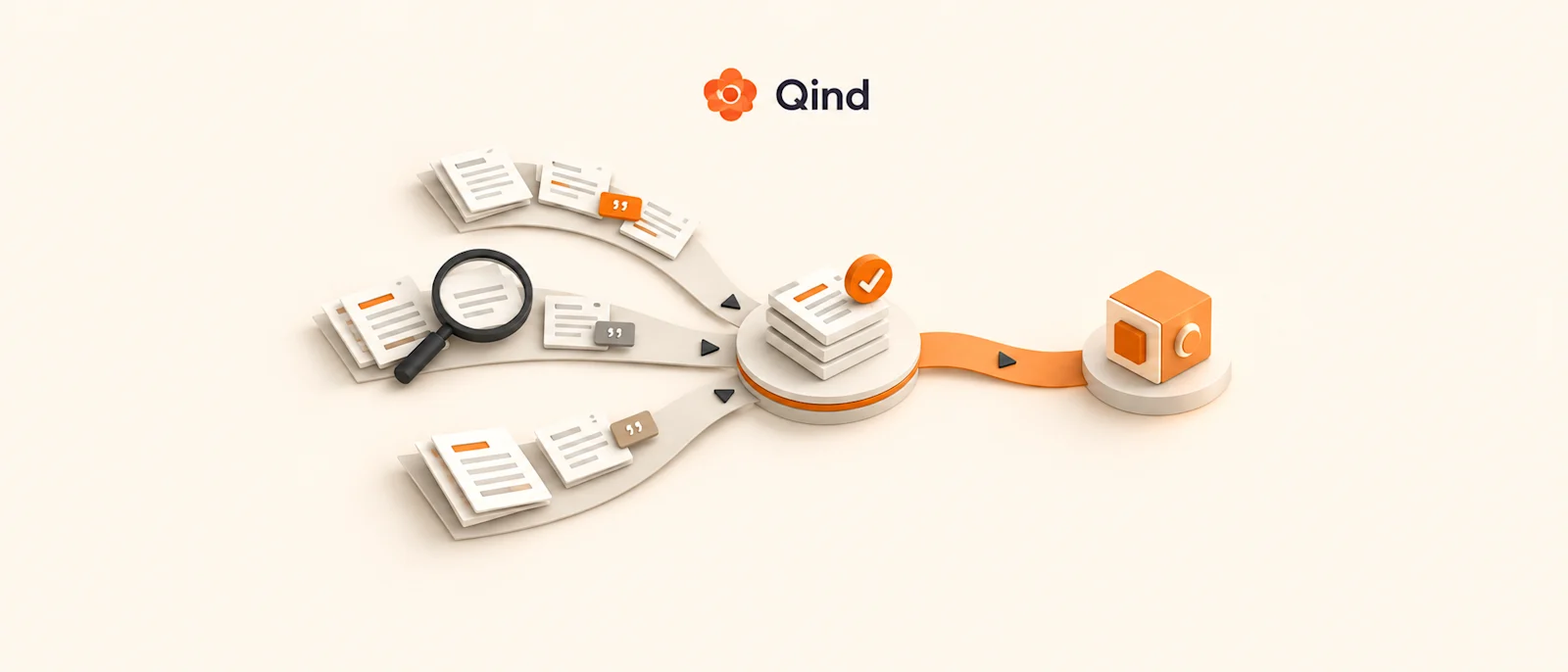
Imagine finding an article about a new AI workflow. Instead of manually deciding which folder it belongs to, which tags to add, what summary to write, how to name it, or whether you should create a note, you simply save the page. The system can then understand the content, summarize it, suggest tags, and organize it.
That's the idea behind features like Qind's browser extension: it lets you save a page directly from the browser while AI automatically summarizes, tags, and organizes the captured content. The important part isn't the button that says Save Page—it's what happens after you click it.
From "Save This" to "Understand This"
This is where knowledge tools are fundamentally changing. In the old model, saving a page meant "I don't want to lose this URL." In an AI-first model, saving a page means "I don't want to lose the useful information contained in this page."
Those are not the same thing. A URL is just an address, but the actual value might be a single idea, a technical solution, a research finding, a useful example, a business insight, or an explanation you finally understood. AI helps extract that value at the moment you capture the source, meaning your future self doesn't necessarily have to reopen the entire page just to remember why you saved it.
Auto-Tagging Is More Important Than It Sounds
At first, automatic tagging sounds like a small convenience, but it isn't. Manual organization creates friction. You find something useful, but then you have to stop what you're doing and decide: "Which tags should I add? AI? Productivity? Research? Knowledge Management? Automation?" Suddenly you're sitting there thinking about taxonomy instead of continuing your research.
That's backwards. Organization should serve the knowledge worker—not become another task for them. Automatic tagging removes that friction. Instead of asking "How should I organize this?", you can simply ask "Is this worth keeping?" That's a much better question.
AI-First Note-Taking Isn't About Taking More Notes
There's another common misconception around AI productivity: people sometimes assume that AI note-taking means "Let AI create even more notes for me." That's not the goal. The goal should be to reduce the amount of manual work required to preserve useful information.
If AI creates 500 summaries that you never look at, you've simply created another information problem. Good AI-first productivity works in the opposite direction:
Capture with almost no friction.
Let AI handle the repetitive organization.
Retrieve the information when you actually need it.
That's a much healthier relationship with your knowledge.
What Happens to My 1,700 Links?
If I could go back to that 1,700-URL collection, I wouldn't try to organize it manually. I wouldn't create 50 folders or spend a weekend opening every link. I'd want a system that could help me answer natural questions like:
"Show me the articles I saved about AI agents."
"What did I save about semantic search?"
"Find the research tools I was interested in."
"Why did I save this?"
That's where semantic search and AI-generated summaries become much more interesting than traditional bookmarks. You're no longer searching for a URL—you're searching for a piece of knowledge.
Surviving the AI Era Means Protecting Your Attention
We're entering a period where AI makes it easier than ever to generate information, which means information itself is becoming less scarce. Your ability to filter, retain, retrieve, and use the right information becomes far more valuable.
You don't need to read everything, save everything, or collect another 2,000 bookmarks—and you definitely don't need to spend your evenings organizing them. The real productivity advantage in the AI era is much simpler: knowing what to keep, letting AI handle the maintenance, and staying focused on what actually matters.
Keep Your Knowledge. Not Your Clutter.
I still like saving things, I research constantly, and I still find articles, tools, papers, and ideas that I don't want to lose. The difference is that I no longer want my knowledge system to depend entirely on my ability to organize it manually.
That's what AI-first knowledge tools are really about: not creating more notes, folders, or links, but making the distance between "This is interesting; I want to keep it" and "I need that information now" as short as possible.
In an AI-heavy world, the advantage won't necessarily belong to the person who collects the most information. It will belong to the person who can find the right information at the right moment—and get back to work.
Save less manually. Understand more automatically. Stay focused.