
A colleague sends you a folder, a project board, and a message saying everything you need is inside. There are research documents, meeting notes, presentation decks, spreadsheets, and links to previous discussions. The handoff looks complete. Then you start working and discover that the most important information is still missing: why the team chose this direction, which findings shaped the plan, and what everyone already tried before you arrived.
You can see the output of the work, but understanding it requires another round of investigation. A recommendation appears in a presentation without its supporting evidence. A rejected idea resurfaces because nobody explained why it was rejected. An unresolved question looks like a settled decision because the document never made the distinction clear. The files survived the transition; the reasoning became harder to access.
A useful knowledge handoff makes that reasoning available. Whether you are transferring a project, finishing a client engagement, preparing for time away, or returning to your own work months later, the goal is to help the next person continue with enough context to make informed choices.
What Is a Knowledge Handoff?
A knowledge handoff is the transfer of the information someone needs to understand and continue a piece of work. It includes the current state of the project, the decisions that shaped it, the evidence behind those decisions, and the questions that remain unresolved. Documents are part of the handoff, but their usefulness depends on how clearly those elements are connected.
Consider a website redesign. The final designs show what the team intends to build. A useful handoff also explains which customer problems the design addresses, what the usability sessions revealed, which alternatives were explored, and where technical constraints affected the result. Without that context, a new designer may change something that looks arbitrary but exists for a specific reason.
The same principle applies to research, engineering, marketing, and client work. Someone can inherit all your materials and still struggle to understand what deserves their attention. A knowledge handoff gives them a starting point and a path through the evidence.
Why a Shared Folder Still Leaves People Guessing
A folder structure usually reflects how information was created. Interviews go into one folder, meeting notes into another, and presentations into a third. That arrangement can make storage manageable, but the person receiving the project often approaches it with different questions: What are we trying to accomplish? What has already been decided? What could change the plan?
Answering those questions may require moving between several files and reconstructing connections that were obvious to the original team. A customer quote explains a design choice, but the quote lives in a transcript. A meeting changed the scope, but the change appears only in someone’s notes. A spreadsheet supports the business case, but nobody identified which assumptions matter most.
The handoff becomes easier to use when it follows the recipient’s questions. Keep the underlying materials, then add an entry point that explains how they relate to the current work. That entry point can be a short document; its value comes from directing attention accurately.
Preserve the Reasoning Behind Important Decisions
A decision becomes more useful when someone can understand the conditions under which it was made. “We chose option B” records an outcome. “We chose option B because it met the launch deadline without requiring a migration, although option A may become preferable at a larger scale” records a decision someone can revisit intelligently.
For consequential choices, capture the problem, the alternatives considered, the evidence used, and the tradeoff accepted. Include the date and any condition that would justify reviewing the decision. This gives the next person a way to evaluate whether the reasoning still applies when circumstances change.
You do not need a formal record for every small choice. Focus on decisions that would be costly to misunderstand or repeat. If someone is likely to ask why a project took a particular direction, the answer belongs in the handoff. For more on how context affects the usefulness of older material, see Your Knowledge Base Is Full of Expired Information.
Separate Evidence, Interpretation, and Open Questions
Project documentation often becomes confusing when observations and conclusions appear with the same level of certainty. A note saying customers want a simpler onboarding process might describe a repeated finding, a single comment, or the team’s interpretation of several unrelated complaints. Those possibilities should influence the next decision differently.
Write down what the source actually shows, then explain your interpretation. For example, “Four participants needed help locating the import button” is an observation. “The import step needs a clearer entry point” is an interpretation. “Would moving the button improve completion?” is a question to investigate. Keeping these distinctions visible helps the next person understand both the evidence and its limits.
Open questions also deserve an explicit place in the handoff. Include what is unknown, why it matters, and the next reasonable step. This prevents unfinished thinking from being mistaken for an approved plan and makes it easier for someone to continue the investigation.
Keep Sources Close to the Claims They Support
A summary provides orientation, but the next person may need to inspect the original material before acting. Place source links beside the claims they support, and identify the relevant section, passage, or timestamp when possible. A link to an entire research folder leaves the recipient with another search task; a link to the interview that shaped a recommendation gives them a clear route to verification.
For example, a handoff might explain that smaller customers struggled with setup, link to the relevant interview notes, and describe how that finding influenced the proposed onboarding changes. Someone can then assess the recommendation without depending entirely on the original author’s memory.
This also makes disagreement more productive. When a new colleague questions a conclusion, the discussion can return to the evidence and assumptions behind it. The handoff becomes a foundation for further work rather than a document everyone must accept at face value.
Build a Handoff Around Five Practical Questions
A useful handoff can begin with five questions: What is the project trying to achieve? Where does the work stand today? Which decisions shaped the current approach? What evidence should the next person review? What remains unresolved? Answering these questions creates a practical overview without reproducing every document.
Imagine handing over an onboarding improvement project. The overview explains that the goal is to help new customers complete their first import. It identifies the current prototype, links to the research supporting the changes, records why the team postponed a broader redesign, and flags an unanswered question about larger customer accounts. The next action is to test the revised flow with the relevant users.
That overview helps the recipient orient themselves before opening the detailed materials. From there, they can follow the links that matter to their task. The amount of documentation should match the project’s complexity, but even a small handoff benefits from making the current state and next step explicit.
Test the Handoff Before You Need It
Ask someone unfamiliar with the project to use the handoff for a realistic task. They might explain the current plan, locate the evidence behind a recommendation, or identify what needs to happen next. Notice where they hesitate and which questions require you to supply information verbally.
Those moments reveal gaps worth fixing. If you have to explain that a document is outdated, add that status to the document or overview. If you have to describe why an option was rejected, record the reasoning. If the person cannot find the source behind a claim, improve the link.
A successful test does not require the recipient to understand everything immediately. It should show that they can find the next piece of information they need and distinguish established decisions from work still in progress.
Where Qind Fits Into the Workflow
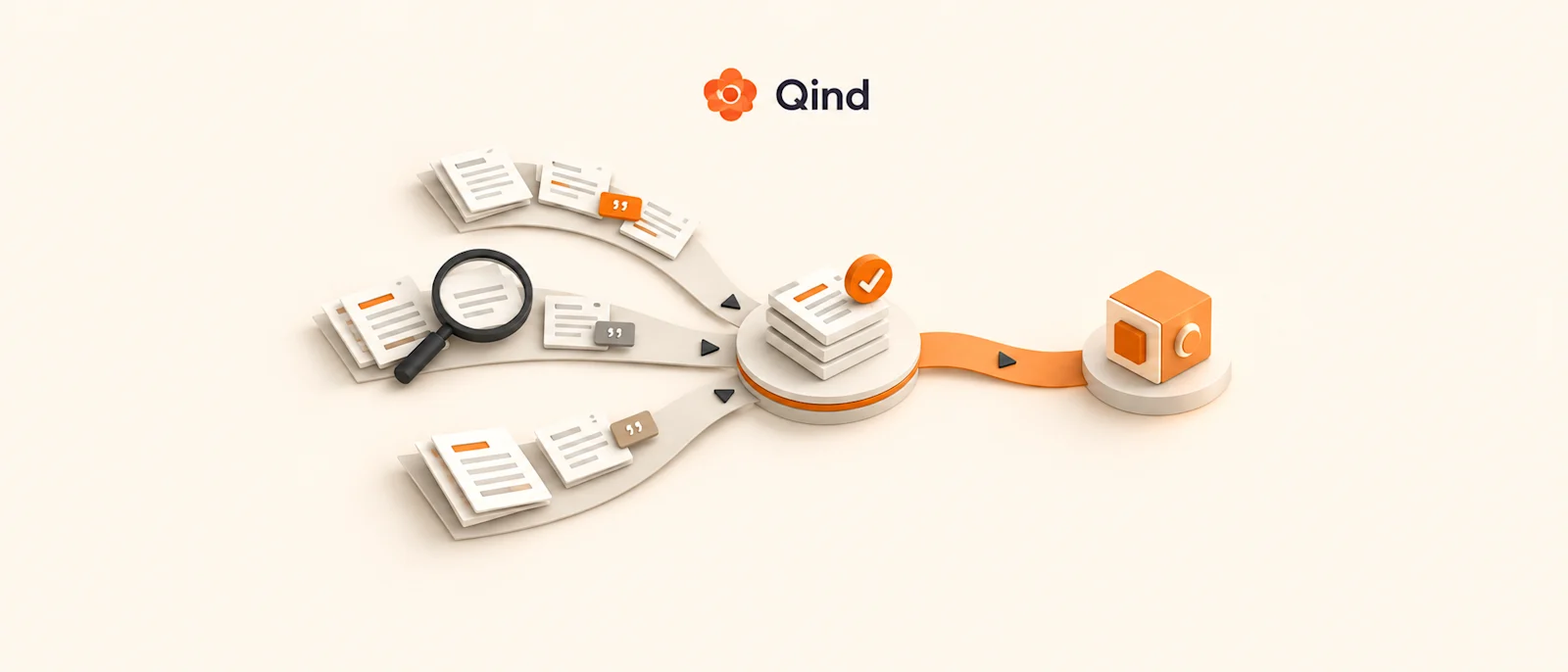
Qind can support the source-management part of a handoff. Its published features include capturing articles, PDFs, notes, images, and audio, generating summaries, and answering questions about saved material with citations back to the sources. These capabilities can help someone explore the materials behind a project without opening each item individually. Explore Qind’s features.
The person preparing the handoff still needs to explain the project’s status, identify approved decisions, and make unresolved questions visible. A searchable library supports that explanation by keeping the underlying material accessible. Together, the overview and its sources give the recipient both direction and a way to check the details.
The workflow can stay straightforward: preserve the useful sources as work happens, record important decisions while their reasoning is fresh, and create a concise handoff overview when responsibility changes. Then test whether someone else can use it to continue the work.
Make Your Work Easier to Continue
A project handoff is useful when the next person can understand what matters and decide how to proceed. File counts and document length tell you little about that. A short overview connected to clear evidence may serve them better than a large archive with no explanation of how it fits together.
Before your next handoff, check whether someone can identify the goal, understand the major decisions, inspect the supporting sources, and find the unresolved questions. Wherever they would need to reconstruct your reasoning, add enough context to help them move forward.
Start building that foundation while the project is active. Use Qind to keep your source material searchable, then connect it to the decisions and questions that make your work understandable.