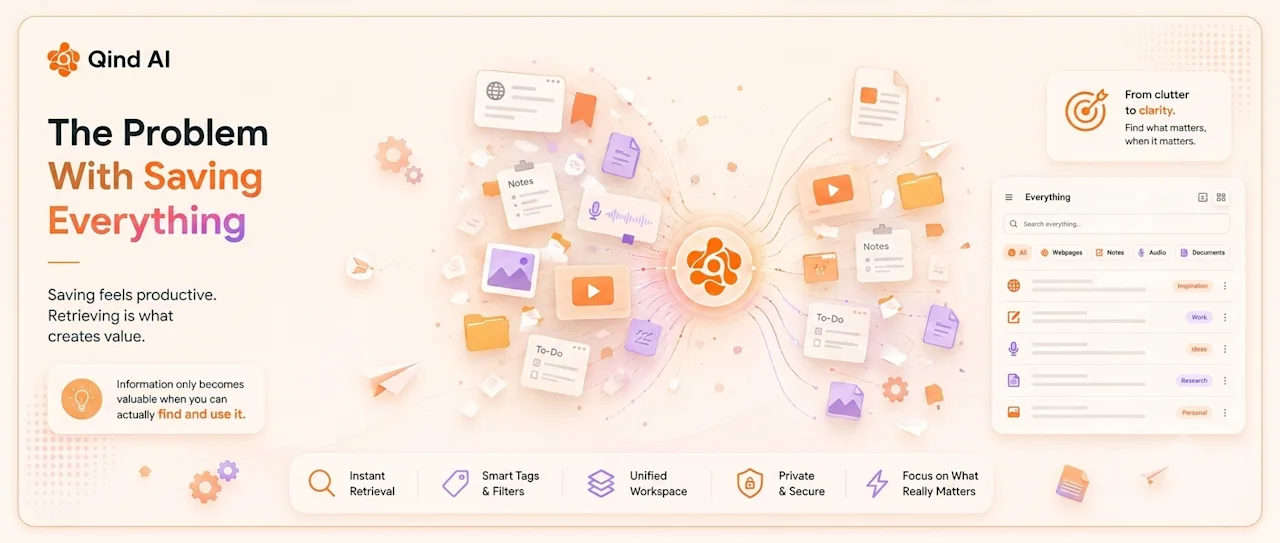
We save everything.
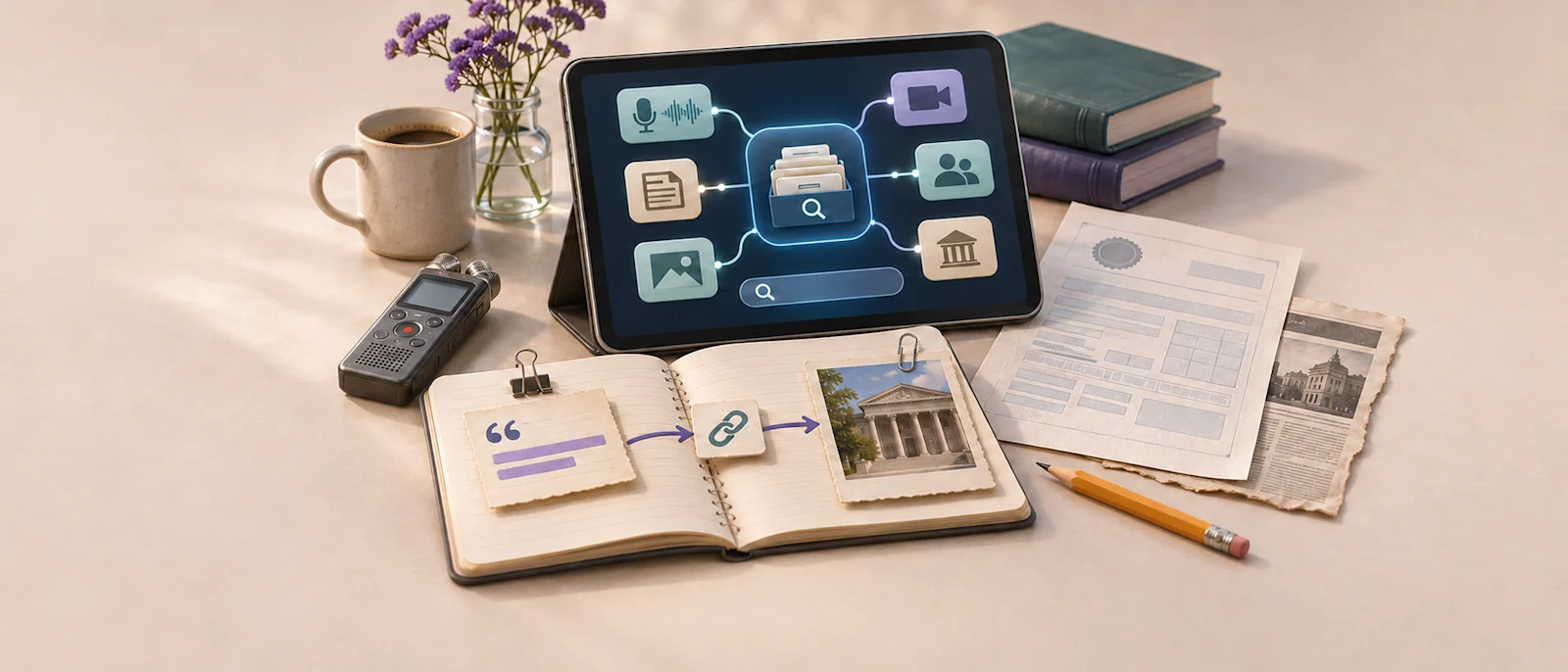
An article we want to read later. A screenshot that might come in handy one day. A YouTube video we didn't have time to watch. A document shared with us. A note taken during a meeting. A post we found interesting.
Saving something gives us a strange sense of accomplishment. We tell ourselves, "I'll get back to this later."
But then, we don't.
Months later, we find ourselves with thousands of saved items scattered across browsers, folders, cloud drives, note-taking apps, messaging platforms, and random screenshots. We have successfully saved almost everything; yet, for some reason, we remember almost nothing. The problem isn't that we save too much.
The problem is that saving something is not the same as knowing where it is when we need it.
Saving Feels Like Progress
There is a reason we keep saving things.
When we find something interesting or useful, saving it gives us the feeling that we have secured that information. We do not have to remember it at that moment, because we know we can always go back to it.
At least, that's the idea.
The problem arises when that "later" moment finally arrives. You remember reading something about a specific topic a few weeks ago. You know the information was useful. You even have a rough idea of what the subject was. But where was it? Was it in your browser bookmarks? Was it a screenshot? A note? A message you sent to yourself? A PDF in your "Downloads" folder? Or perhaps it was that article you saved six months ago and completely forgot about? That is the moment when the time you thought you saved by bookmarking something is actually squandered trying to find it again.
The More We Save, the Harder It Gets
This creates an interesting paradox.
You would expect having more information to make you more knowledgeable. However, when there is no good way to access that information, the exact opposite can happen.
Imagine having 20 saved articles. Finding something is relatively easy.
Now imagine having 2,000.
The problem has changed.
You don't need more storage. You need a better way to navigate what you already have.
This is where traditional folders, bookmarks, and lists start to reach their limits.
They are good at storing information.
They are much less effective at answering questions like:
"Where is that thing I saved about this topic?"
Or even:
"What have I saved before that could help me with this?"
Those are two very different problems.
Context Is What We Usually Lose
There is another problem with saving information: context disappears surprisingly quickly.
You save an article because one particular idea caught your attention.
Three months later, you find the article again.
You recognize it, but you don't remember why you saved it.
The same thing happens with screenshots.
A screenshot might contain the exact information you need at that moment. However, later on, the image itself won't tell you why it was important, what you were working on, or how it connects to everything else you’ve gathered.
The information is still there.
The meaning around it is gone.
This is why simply collecting more information doesn't necessarily make our digital lives more useful.
From Storage to Retrieval
This is where our perspective on personal information needs to change. The goal shouldn't just be to create a larger digital archive. The goal should be to make this archive useful. Instead of thinking like this:
"Where should I save this?"
we should be able to think:
"I'll probably need this again."
And later, instead of remembering exactly where we put it, we should be able to ask:
"What did I save about this?"
This is a fundamentally different approach. It leads us from storage to retrieval. And retrieval is the point where the true value of the recorded information begins to emerge.
Everything Doesn't Need Another Folder
The traditional solution to digital clutter has always been organization. Create a folder. Add a tag. Create another category. Move items to the right place. Develop a better naming system. This method works—until it doesn't. Because eventually, you end up spending just as much time organizing information as you do consuming it. Moreover, there is another issue: information rarely belongs to a single category. An article about artificial intelligence might relate to your work, a personal project, or a topic you intend to research later. So, where does that article belong? The truth is, information does not naturally exist within neat, organized folders.
Our information is connected. Our storage systems usually aren't.
A Better Way to Think About "Saving"
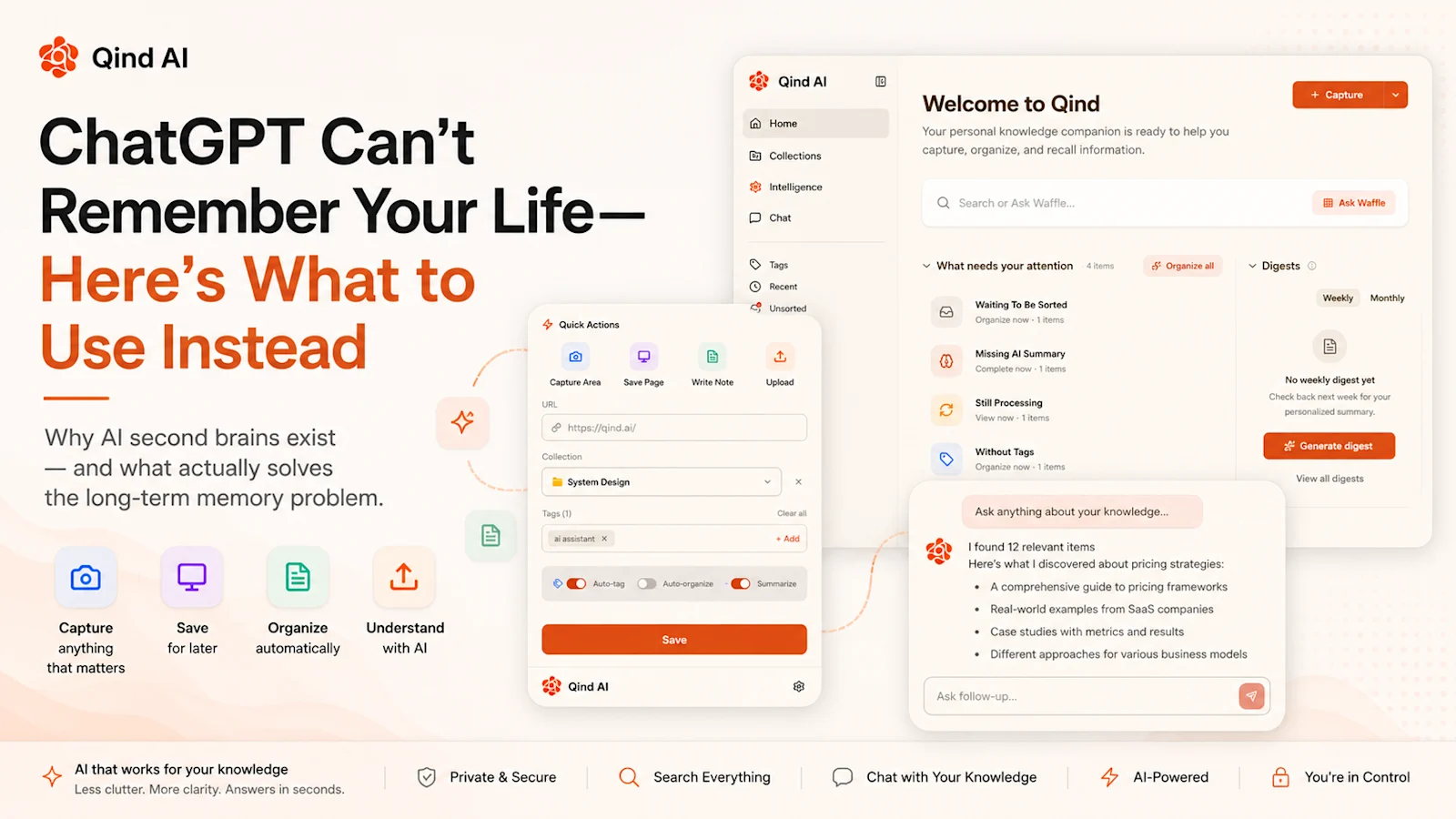
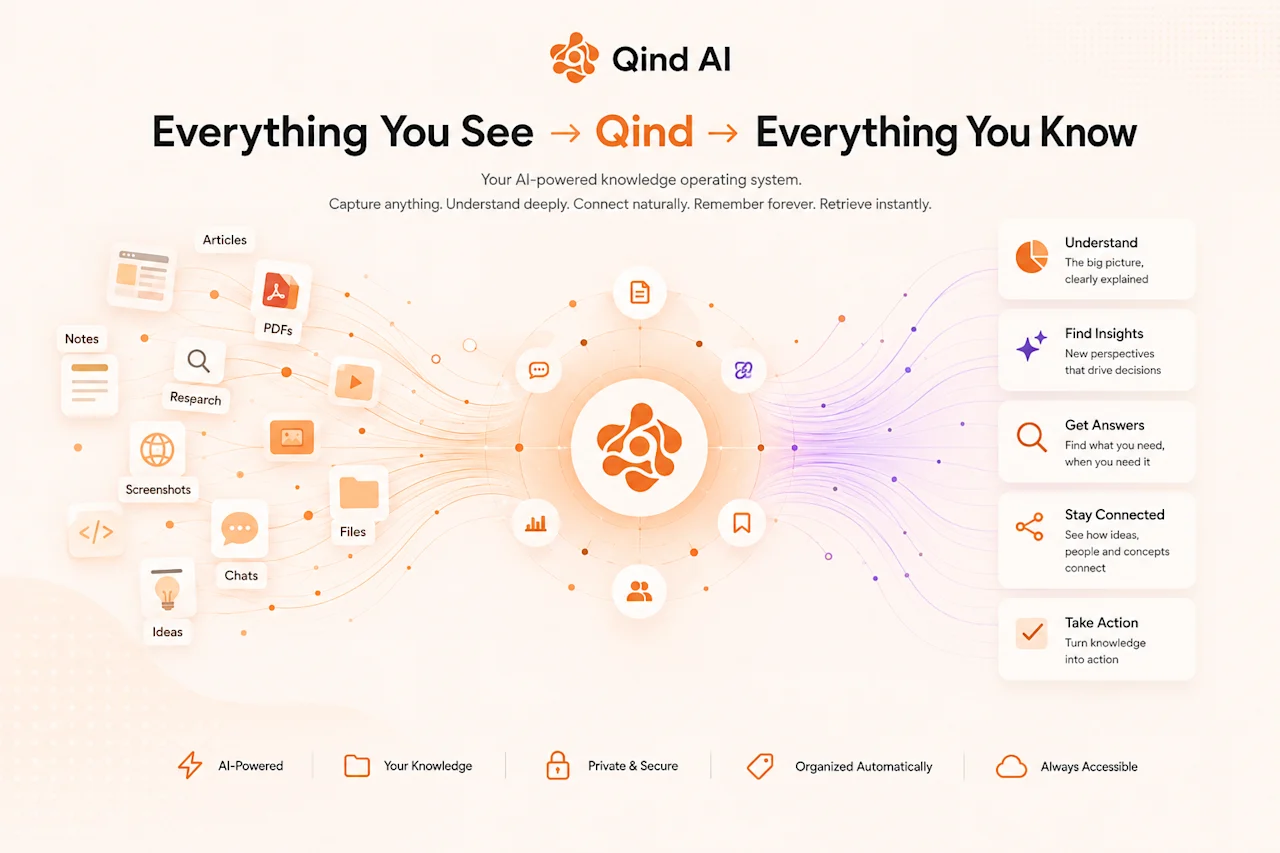
Perhaps the future of personal information management isn't about organizing everything better. Perhaps it’s about making organization less important. You should be able to save an article without immediately deciding which folder it belongs to. You should be able to store a screenshot without remembering exactly why it might be useful. You should be able to collect information now and realize its importance later—when you actually need it. This is the idea behind Qind’s approach to personal information. Instead of forcing everything into a rigid structure, Qind brings together your different types of information and makes them searchable and accessible whenever you need them. Because the real question isn't:
"How much information have I saved?"
The real question is:
"Can I actually find and use it when it matters?"
Saving Is Only the Beginning
We have become incredibly adept at gathering information. Bookmarks, screenshots, notes, documents, videos, articles—there is virtually no limit to what we can save. However, gathering information is not the same as making that information useful. Saving is not the ultimate goal; it is merely the first step. True value emerges when that information becomes accessible, interconnected, and useful. For if we save everything but can find nothing, we cannot truly be said to have built a second brain.
We've just built a very large digital drawer.