Modern work is built around interruption. You start writing a document, Slack lights up, an email arrives, a calendar reminder appears, someone mentions you in a comment, and a browser tab quietly becomes another browser tab. None of these interruptions looks serious on its own. Most take only a few seconds.
But the cost of switching is not measured only by the time spent looking at the interruption. The real cost is what happens to your attention before, during, and after the switch.
Psychologists have studied this for decades. When people alternate between tasks, performance usually slows and errors can increase. The brain has to stop following one set of rules, activate another, and later reconstruct where it left off. Even when the switch is predictable, there is still a measurable cost. American Psychological Association
The result is a workday that can feel busy without feeling deep. We are not necessarily doing several difficult things at the same time. We are doing one thing, then another, then returning to the first while repeatedly paying the cost of rebuilding context.
Multitasking Is Often Just Rapid Task Switching
The word “multitasking” makes it sound as if the brain is performing several complex tasks in parallel. In reality, much of what we call multitasking is rapid switching between activities. APA research on task switching describes this as repeatedly shifting goals and activating different rules depending on the task. American Psychological Association
That difference matters because switching feels almost instantaneous. You can move from a document to Slack in one click. The interface changes immediately, so it is easy to assume your mind does too.
It does not.
In classic experiments, participants repeatedly lost time when moving from one task to another. The cost increased when tasks were more complex or unfamiliar. Preparation helped, but it did not eliminate the switching penalty. American Psychological Association
The visible action may take half a second.
The cognitive transition can take much longer.
The Brain Has to Load the New Task
One reason switching costs us attention is that tasks are more than windows on a screen. Each one has its own goal, context, rules, and current state.
When you switch from writing a product strategy to answering a technical question in Slack, your brain has to change what it is optimizing for. When you return to the strategy document, you need to remember what argument you were building, what evidence you were considering, and what you intended to write next.
Researchers have described parts of this process as goal shifting and rule activation. You first decide that you are moving to a different task, then mentally activate the rules and information required to perform it. American Psychological Association
This happens so naturally that we rarely notice it.
We notice only that after returning to the document, we sometimes stare at the screen for a moment and think: “Where was I?”
The Switching Cost Gets Worse as Work Gets More Complex
Not all interruptions are equally expensive.
Moving between two simple, familiar actions may create only a small cost. But modern knowledge work is often neither simple nor repetitive. Writing strategy, debugging software, analyzing research, planning a roadmap, and interpreting customer feedback all require keeping a large amount of context active at once.
APA's summary of task-switching research notes that the time penalty grows as tasks become more complex and unfamiliar. American Psychological Association
That means the moments when interruptions are most tempting can also be the moments when they are most expensive. A difficult task creates discomfort, so checking a message provides a quick escape. Unfortunately, returning to the difficult task requires rebuilding exactly the mental state you just abandoned.
The harder the work, the more valuable uninterrupted context becomes.
Our Screens Have Become Extremely Good at Encouraging Switching
Gloria Mark and her colleagues have spent years studying attention in real digital workplaces. Her research suggests that the amount of time people spend on one screen before switching has fallen dramatically over time.
According to UC Irvine, early studies found that people remained on a screen for around two and a half minutes on average. Later measurements fell to around 75 seconds. More recent research reported an average of approximately 47 seconds before attention shifted elsewhere. UCI News
Forty-seven seconds is not much time.
It is barely enough to begin understanding a complicated paragraph, inspect an unfamiliar code path, or develop the next part of a difficult argument. Yet many of our work environments are optimized for exactly this rhythm: notification, response, return, notification, response, return.
The problem is not simply that people have suddenly lost the ability to focus.
Our digital environments continuously invite us to stop.
We Are Not Only Being Interrupted by Other People
It is easy to blame notifications.
Slack, Teams, email, calendar alerts, comments, and phone notifications obviously compete for attention. Turning some of them off can help.
But external interruptions are only part of the problem.
People also interrupt themselves.
You remember something and open a new tab. You wonder whether there is a new message. You decide to quickly check a metric. You search for one fact and end up opening three related pages. The interruption did not arrive from the outside. Your own attention created it.
This is one reason solving distraction is harder than simply enabling “Do Not Disturb.” The modern work environment has trained us to expect that another source of information is always one click away.
Returning to the Task Is More Expensive Than Leaving It
One of the most widely repeated findings from Gloria Mark's research is that returning to a project after an interruption can take much longer than the interruption itself. UC Irvine summarizes her work by noting that it can take up to around 25 minutes to return attention to a project after being interrupted. UC Irvine ICS
That number should not be interpreted as meaning every notification automatically destroys exactly 25 minutes of productivity. Real-world attention is more complicated than that, and people often work on other tasks before returning to the original one.
But that is precisely the point.
After being interrupted, we do not always immediately go back.
One message leads to another. The Slack question reminds us of an email. The email requires checking a document. Fifteen minutes later, we return to the original task carrying an entirely different set of thoughts.
The interruption was short.
The detour was not.
Interruptions Can Make Us Work Faster and Still Feel Worse
There is another counterintuitive finding in interruption research.
In a controlled study by Gloria Mark, Daniela Gudith, and Ulrich Klocke, participants who were interrupted actually completed tasks faster, with no observed reduction in quality. At first glance, that sounds like interruptions might improve productivity.
But the participants were compensating.
They worked faster because they knew they were losing time. The interrupted groups reported higher stress, greater frustration, more time pressure, higher workload, and greater effort. UC Irvine ICS
This helps explain a familiar experience of modern work: you can finish a surprising amount and still feel exhausted.
The output does not necessarily reveal the cognitive price paid to produce it.
A Full Day Can Contain Very Little Continuous Work
Imagine an eight-hour workday with no obvious downtime. From the outside, it looks extremely productive. Messages were answered, meetings attended, tickets updated, documents edited, and decisions discussed.
But now measure something different: how many uninterrupted periods lasted long enough to think deeply about one difficult problem?
The answer can be surprisingly small.
This is the hidden difference between activity and continuity. A day can contain hundreds of productive micro-actions while offering almost no sustained attention.
For routine work, that may be fine.
For difficult knowledge work, it can be disastrous.
Every Tool Switch Carries Context With It
The switching problem is not only about attention. It is also about context.
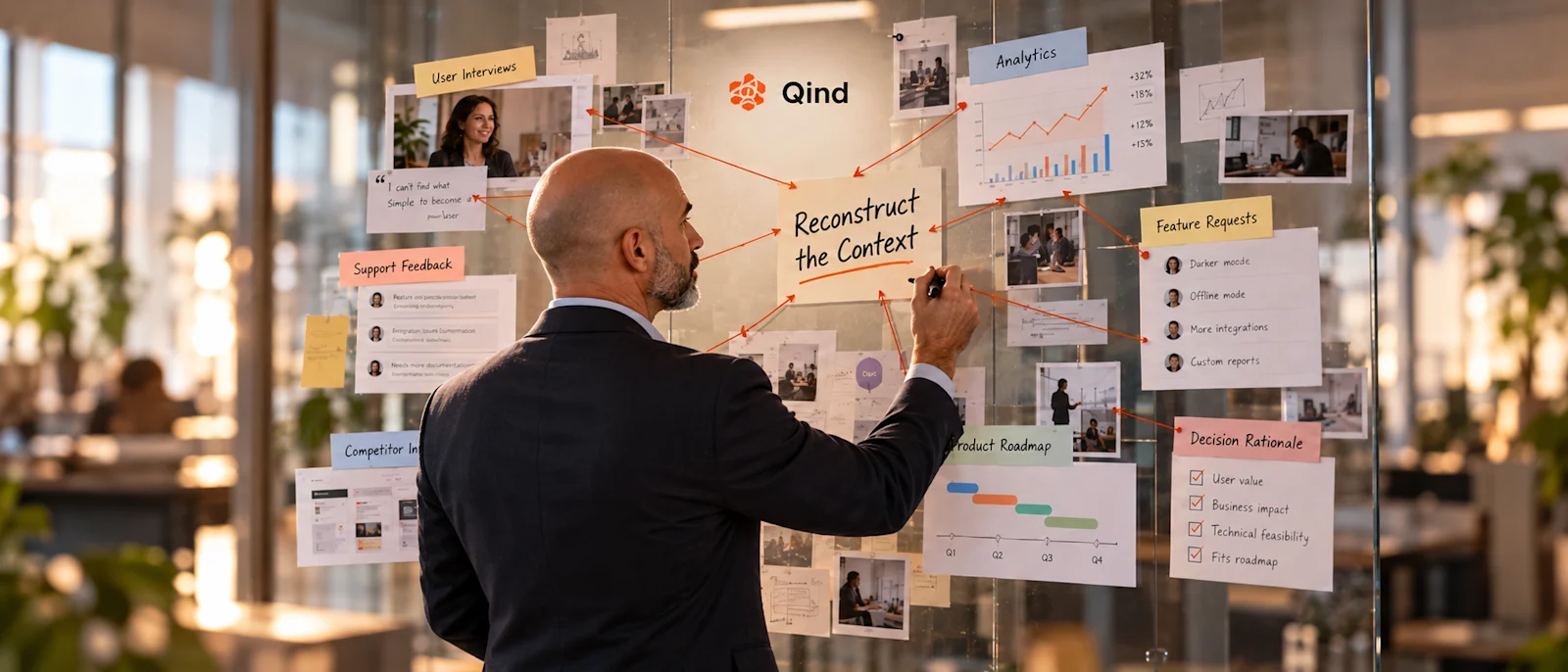
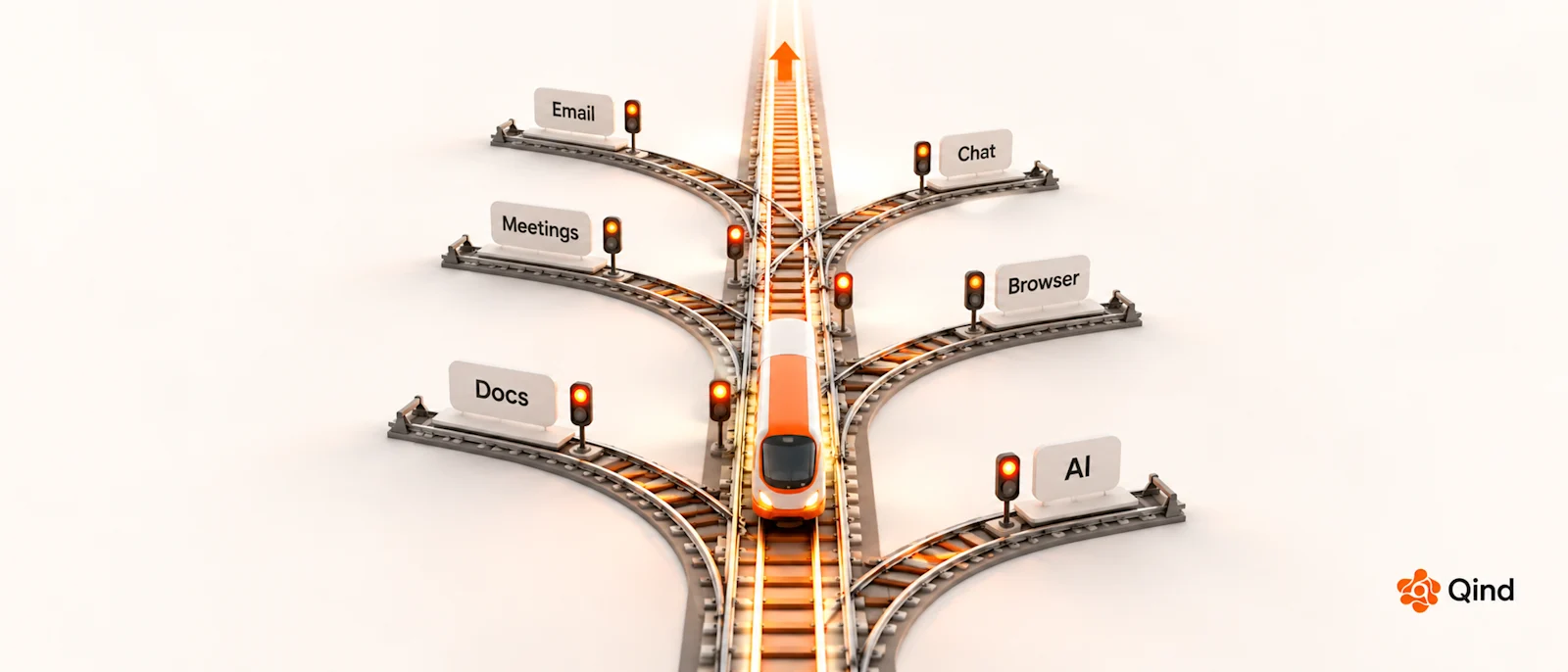
A product manager may move between Jira, Slack, analytics, research notes, customer interviews, a roadmap, and an AI assistant while working on a single decision. Each tool contains one part of the picture.
Every switch requires reconstructing which part of the problem this tool represents.
Why did I open this dashboard?
Which customer was this note about?
Which requirement was being discussed in that Slack thread?
What was I trying to confirm in Jira?
The information may all be available, yet the user repeatedly has to rebuild the connections between it.
That reconstruction is work.
It just rarely appears on a task list.
Context Switching Is Not the Same as Tool Switching
This distinction is important.
Opening another application is not automatically bad. Sometimes multiple tools are genuinely necessary. A developer may need an editor, browser, terminal, documentation, and monitoring system to solve one problem.
The expensive switch happens when the mental objective changes.
Checking documentation while debugging may support the same cognitive thread. Answering an unrelated Slack question in the middle of debugging breaks it.
The goal should therefore not be “use fewer applications at all costs.”
It should be “protect the continuity of the problem you are currently solving.”
Notifications Are Only One Part of the Design Problem
Most advice about focus eventually becomes a list of personal habits: disable notifications, close unnecessary tabs, schedule focus time, put your phone away.
Those strategies can help, but they also place almost all responsibility on the individual.
Modern work systems themselves are designed around visibility and responsiveness. Teams expect rapid replies. Status indicators show whether someone is online. Email encourages constant inbox checking. Collaboration platforms surface badges, mentions, and alerts because engagement is useful to the platform and responsiveness is useful to the organization.
The worker is then expected to somehow maintain deep focus inside an environment designed to continuously surface new information.
That is not merely a discipline problem.
It is a design problem.
The Fastest Response Is Not Always the Best Work
Many workplace cultures implicitly reward responsiveness.
A Slack message answered in thirty seconds looks attentive. An email response within minutes looks efficient. A colleague who is always reachable feels dependable.
Deep work produces a different signal.
For an hour or two, the person may appear unavailable.
Nothing visible happens.
Then a difficult bug is solved, an important strategy becomes clear, or a complex analysis finally makes sense.
The paradox is that environments optimized for visible responsiveness can unintentionally undermine the kind of work that creates the most value.
AI Can Reduce Switching — or Create Even More of It
AI introduces an interesting possibility.
Used well, AI can reduce the need to jump between tools. Instead of searching across multiple sources manually, someone can ask a question and retrieve an answer quickly. Instead of switching into another application to rewrite a paragraph or understand a concept, AI assistance can sometimes keep the user inside the current workflow.
That could reduce switching costs.
But AI can also become another destination.
Another tab.
Another chat.
Another place where context has to be copied, explained, and reconstructed.
If every task now involves switching from the original work into an AI interface and back again, the productivity benefit may be partly offset by another layer of cognitive movement.
The best AI workflows will likely be those that reduce context reconstruction rather than simply adding another powerful tool to the pile.
Search Friction Is Also a Switching Cost
Sometimes the interruption is not a notification. It is the need to find something.
You remember reading an important document. You know there was a useful Slack discussion. You recall a customer insight from a previous project. But you do not remember where it lives.
You start searching.
That search takes you through folders, messages, browser history, notes, and tabs. Even if you eventually find the information, you may have left the original problem behind for several minutes.
This is one reason retrieval matters so much in knowledge work. Finding information faster is not just about saving search time. It protects the mental thread of the work you were already doing.
The longer retrieval takes, the more likely the original thought is to disappear.
Deep Work Requires More Than an Empty Calendar
It is tempting to think that focus can be solved simply by blocking two hours on the calendar.
That helps, but deep attention depends on more than available time.
You need enough uninterrupted time to load the problem into working memory, understand its structure, explore alternatives, and make progress before the context is lost.
If that period is repeatedly interrupted, the calendar may technically contain a focus block while the mind never reaches sustained focus.
This is why protecting attention requires both time and continuity.
One Practical Strategy: Batch Shallow Work
One of the simplest ways to reduce switching is to stop treating every incoming request as a real-time event.
Email can often wait.
Slack messages can often wait.
Administrative tasks can often wait.
Instead of checking them continuously, they can be processed in batches. The goal is not to become unresponsive. It is to replace dozens of unpredictable switches with a smaller number of deliberate ones.
This gives the brain a chance to stay inside one context long enough for difficult thinking to happen.
Another Strategy: Leave Yourself a Re-entry Point
Interruptions cannot always be avoided.
A production incident happens. A customer needs an answer. A meeting begins. Someone genuinely needs help.
When leaving a complex task, one useful habit is to write a very short note describing the next step before switching away.
“Next: compare the onboarding drop-off with the mobile cohort.”
“Bug likely happens after token refresh; inspect retry path.”
“Paragraph needs evidence for the second claim.”
This creates a re-entry point.
Instead of returning and reconstructing the entire mental state from scratch, you have left instructions for your future self.
Reduce the Number of Places Where Context Lives
Another strategy is structural rather than behavioral.
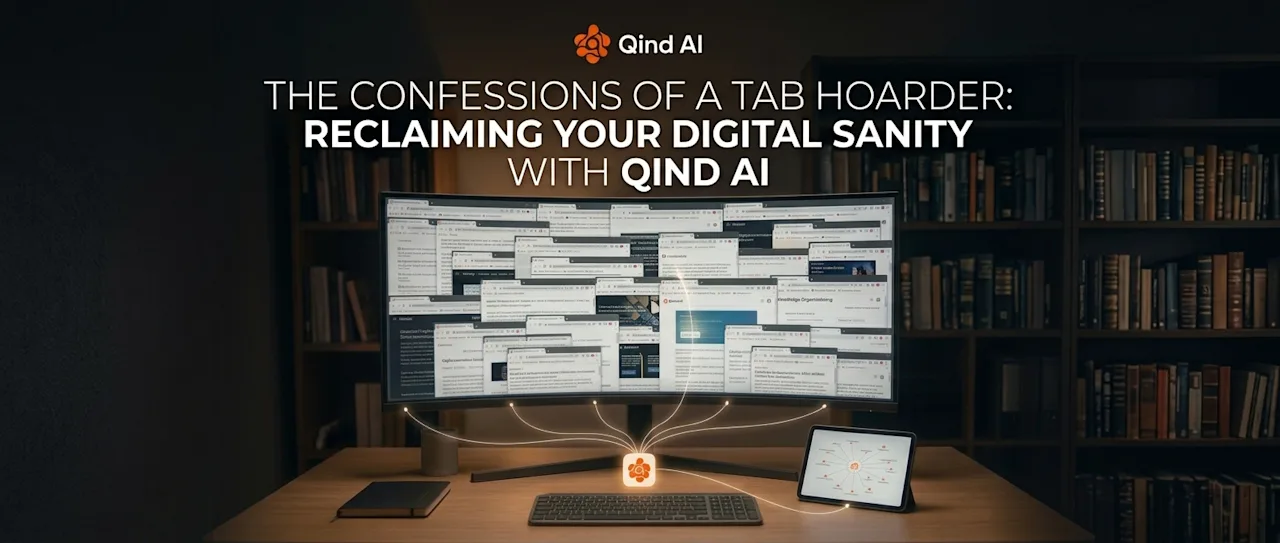
If relevant knowledge is scattered across too many systems, every decision requires repeated navigation. Reducing fragmentation can make it easier to stay within the same cognitive thread even when information comes from different sources.
This does not necessarily mean forcing everything into one application. Different tools exist for good reasons.
The goal is to make retrieval and relationships between information easier so that finding context does not become an entirely separate task.
That is where knowledge systems can support focus rather than merely store information.
The Goal Is Not Perfect Focus
Nobody is going to work for eight hours without switching tasks.
Nor should they.
Collaboration requires interruptions. Work changes throughout the day. Sometimes switching tasks provides a useful mental reset. Sometimes the new task really is more important.
The goal is not to eliminate switching.
It is to stop pretending switching is free.
Once the cost becomes visible, teams can make better decisions about when interruption is worth it.
Your Brain Isn’t Multitasking. It’s Paying a Switching Tax.
The research is remarkably consistent on one basic point: moving between tasks carries a cognitive cost. Even small switching penalties accumulate when they happen repeatedly, and those costs grow when the work is complex or unfamiliar. American Psychological Association
Digital work makes switching almost frictionless at the interface level. One click moves us from strategy to chat, from code to email, from research to a meeting notification. But the brain does not move between contexts as cheaply as the software does.
That mismatch is the switching tax.
We pay it in lost time, reconstruction effort, stress, and fragmented attention.
The solution is not to become perfectly focused or reject collaborative tools. It is to design work so that our most important thinking is interrupted less often, relevant context is easier to retrieve, and every new notification does not automatically become the next task.
Because the real productivity problem may not be how quickly we can switch.
It may be how often we force ourselves to.